The short answer:
Leather headed for regulated markets has to prove it is free of restricted chemicals – hexavalent chromium, certain azo dyes, formaldehyde, pentachlorophenol. Those tests only work if the extract pulled from the leather is clean enough to measure, and solid phase extraction (SPE) is the step that makes it clean.
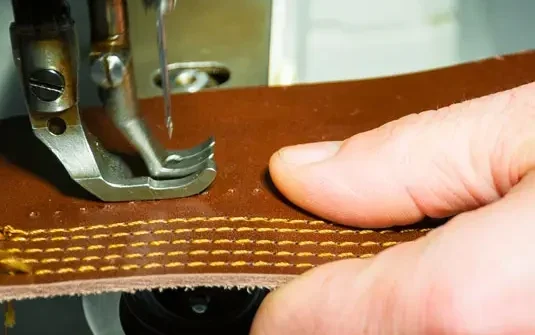
Ask most people what a chemistry lab has to do with a leather jacket and you’ll get a blank look. But leather is one of the most chemically processed natural materials in commerce – and the countries buying it want proof that the chemistry has been kept within safe limits. Solid phase extraction, a technique better known in pharma and food labs, turns out to sit right at the heart of leather compliance testing.
Leather is chemistry – and chemistry is regulated
Tanning, dyeing and finishing all leave chemical traces behind in the finished hide. Consumer-safety regulations such as the EU’s REACH framework, along with international standards, set legal limits on the substances that matter most. The usual suspects a leather lab screens for include:
- Hexavalent chromium – Cr(VI). A by-product of chrome tanning and a skin sensitiser, restricted to very low levels in the EU. Tested by EN ISO 17075.
- Restricted azo dyes. Certain dyes break down to release carcinogenic aromatic amines. Screened by EN ISO 17234.
- Can arise from retanning agents; tightly limited for skin-contact goods. Tested by ISO 17226.
- Pentachlorophenol (PCP) and others. A preservative and anti-mould agent, alongside PAHs and fluorinated compounds, all restricted under REACH.
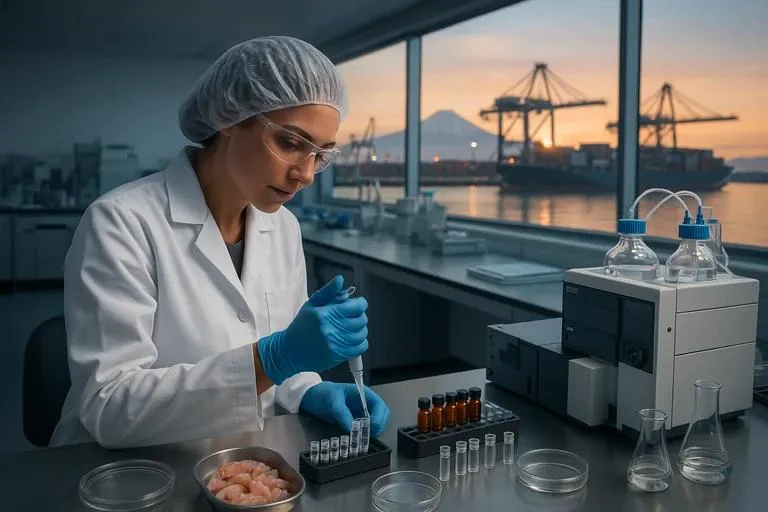
A hide that breaches any of these can be pulled from sale, and for an Indian tannery or leather-goods exporter, that means the same commercial pain a seafood exporter feels at a rejected container: lost shipments and a dented reputation.
The problem: leather is a “dirty” matrix
Here is the analytical challenge. When you extract a piece of leather to release the compound you want to measure, you don’t get a clean solution – you get a coloured, loaded extract full of dyes, fats and finishing chemicals. Those interferences are the enemy of an accurate result.
A heavily coloured extract will throw off a UV-visible spectrophotometer reading. A fat-laden extract will foul a chromatography column and drown the target signal in background noise. In fact, the accepted detection limits for some leather methods are set precisely by how much interference the leather matrix introduces – the “dirt” itself defines how low you can reliably measure.
Where solid phase extraction comes in
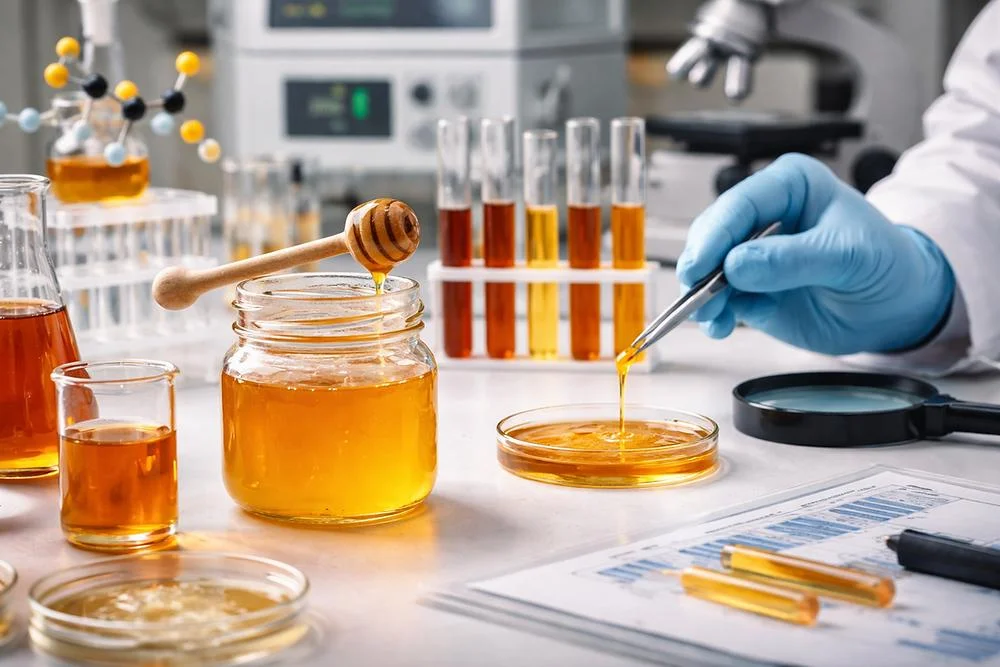
SPE is the clean-up. The extract is passed through a small cartridge packed with a sorbent that grabs hold of the unwanted molecules – the dye, the fat, the interference – while letting your target compound (or the cleaned solution) pass through. What comes out the other side is clean enough to measure.
This isn’t a theoretical fit. The standard chromium VI method (EN ISO 17075) builds SPE directly into the procedure: after the leather is extracted into a buffer, the coloured solution is passed through sorbent-packed cartridges to strip out the interfering dye before the colourimetric measurement is taken. That decolourising step is solid phase extraction, doing exactly what it does in a pharma or food lab – removing interferences without vast volumes of solvent or delicate glassware.
The same principle carries across the other tests: cleaning up the aromatic-amine extract from azo-dye analysis, isolating PCP, concentrating PAHs. Wherever a leather extract is too messy to measure directly, SPE is the tool that rescues it.
The full sample-prep chain in a leather lab
SPE rarely works alone. A typical restricted-substances test runs through three preparation stages before anything reaches the analytical instrument:
- Leather pieces are agitated in a solvent or buffer – often on a reciprocating or wrist-action shaker – to release the target compounds into solution.
- Clean-up (SPE). The extract is passed through cartridges to remove dyes, fats and other interferences.
- For trace-level targets such as aromatic amines or PAHs, the cleaned extract is evaporated under nitrogen to a small volume so the compound rises above the instrument’s detection limit before GC-MS or HPLC.
Solid phase extraction isn’t a niche pharma technique that happens to appear in leather testing. It’s the reason a leather compliance result can be trusted at all.
Where Takahe fits
The same sample-preparation bench that serves pharma and food labs serves material-science and leather testing – the technique is shared even when the industry looks unfamiliar:
- SPE systems – positive-pressure and vacuum manifolds for reproducible clean-up of coloured, fat-heavy leather extracts.
- Laboratory shakers – reciprocating and wrist-action shakers for controlled extraction of leather samples into solvent or buffer.
- Nitrogen evaporators – gentle concentration of cleaned extracts before GC-MS or HPLC for trace-level amines and PAHs.
- Vortexers & mixers – batch mixing for higher-throughput sample preparation across multiple leather specimens.
Frequently asked questions
Why can’t you just inject the leather extract straight into the instrument?
Because a raw leather extract is full of dyes and fats that interfere with the measurement – colouring spectrophotometer readings and fouling chromatography columns. Clean-up by SPE removes those interferences so the target compound can be measured accurately.
Which restricted substances in leather need SPE clean-up?
Most of the trace-level tests benefit from it – hexavalent chromium (where SPE removes interfering dye), restricted azo-dye amines, pentachlorophenol and PAHs among them.
Is SPE the same as the concentration step?
No – they’re different jobs done in sequence. SPE cleans the extract by removing interferences; nitrogen evaporation then concentrates the cleaned extract so a trace target sits within the instrument’s measurable range.
Is this only relevant to large tanneries?
No. Any lab testing leather or leather goods for export compliance – third-party testing houses, in-house QC labs, and material-science departments – runs the same sample-preparation chain.
Setting up leather or material-science testing?
Describe your target substances, sample type and throughput. Our team will recommend the right SPE and sample-prep setup – and reply the same working day. Contact us at info@takaheinstruments.com